You step into the shower on a Tuesday morning in late November. The bathroom tile is cold, but you turn the silver handle with complete confidence. You paid a premium for a tankless water heater precisely for this moment.
For a few minutes, the water wraps around your shoulders, warm and perfect. Then, without warning, a sudden, icy shock hits your back. You twist the dial, but the water remains stubbornly cold. The system did not fail mechanically; it simply choked on its own environment.
| Target Audience | Specific Benefits of the Flush Routine |
|---|---|
| New Homeowners | Prevents premature part failure and expensive emergency service calls. |
| Budget-Conscious Families | Restores energy efficiency, keeping monthly gas or electric bills low. |
| DIY Enthusiasts | Empowers you to handle routine maintenance without waiting for a contractor. |
The Plaque in Your Home’s Arteries
When you signed the paperwork for your tankless system, the salesperson likely sold you on the dream of a maintenance-free utility room. No massive tank to rust out, no stagnant water. But this is the routine error that catches thousands of homeowners off guard every year.
Your water heater might not hold water, but it flash-heats gallons of it every minute. If you live anywhere with hard water, that rapid heating process forces calcium and magnesium to separate from the water. These minerals cling to the copper walls of the heat exchanger.
Think of it like plaque building up in an artery. The narrower the passage becomes, the harder the system has to work to push heat through. Eventually, the heater struggles so much that it triggers an automatic safety shutoff, leaving you shivering in the shower.
I learned this from an old-school plumber named Marcus, who spent thirty years working the frozen, hard-water neighborhoods of the Midwest. He once showed me a cross-section of a ruined heat exchanger. The inside was caked with a thick, chalky white crust. ‘It breathes through a pillow,’ he told me.
‘People think these boxes are magic, but when you ignore the scale, they suffocate. Three gallons of vinegar and an hour of your time is all it takes to clear its throat.’
| Technical Metric | Mechanical Logic & Impact |
|---|---|
| Precipitation Temperature | Calcium carbonate separates from water rapidly above 120 degrees Fahrenheit. |
| Efficiency Loss Rate | Even a 1/16 inch layer of scale increases energy consumption by up to 15 percent. |
| Flow Rate Restriction | Severe buildup drops water pressure, preventing the flow sensor from igniting the burner. |
Executing the White Vinegar Loop
You do not need toxic chemicals or expensive descaling solutions to fix this. You just need a gentle, acidic continuous loop to eat away the calcium. The process is physical, mindful, and surprisingly satisfying. First, gather your supplies: a five-gallon bucket, four gallons of standard food-grade white vinegar, washing machine hoses, and a submersible utility pump.
Head to your utility room and locate your tankless water heater. Turn off the power to the unit completely. This is critical. Next, shut off the main gas valve or flip the breaker if it is an electric model.
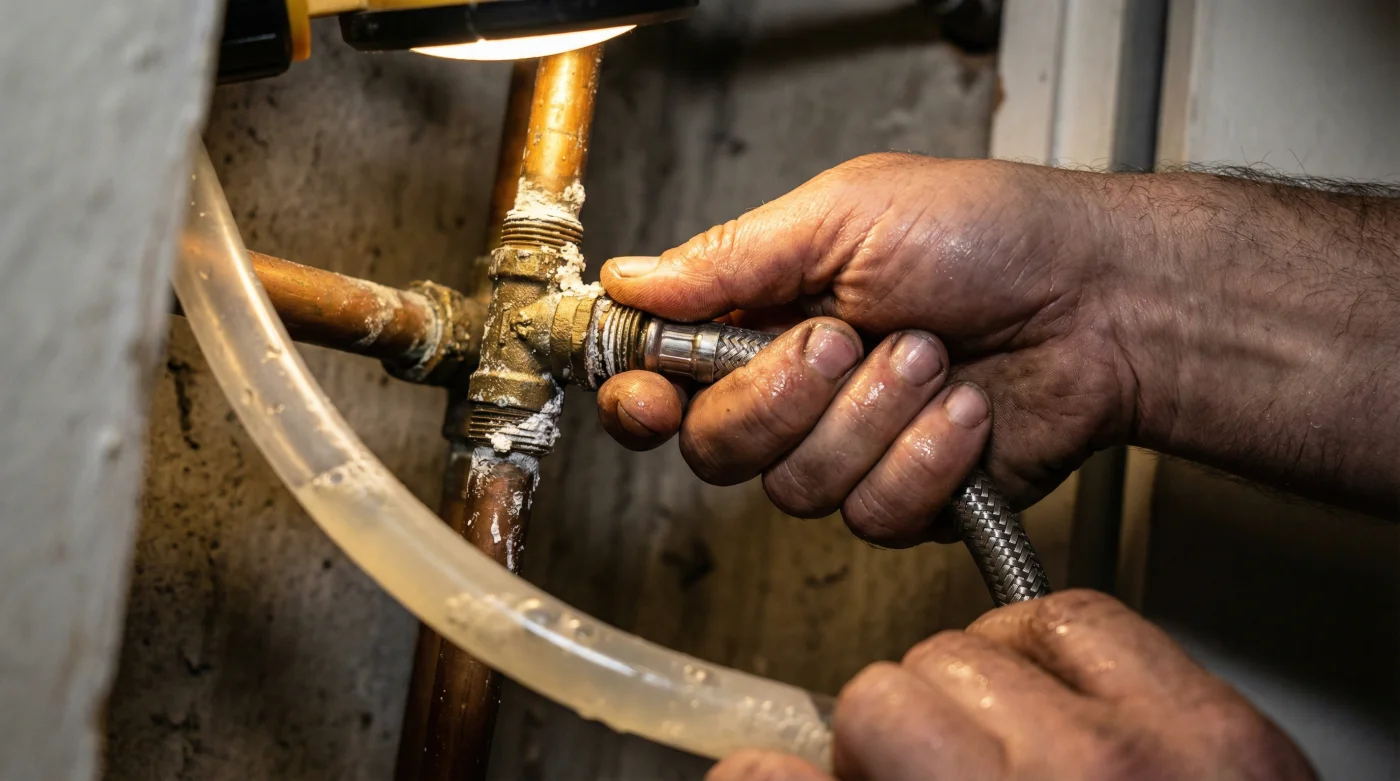
Close the hot and cold water isolation valves. Those are the handles with the blue and red rings right below the unit. This traps the water inside the heater, isolating it from the rest of your house. Remove the purge port caps on both the cold and hot lines.
- R-410A refrigerant bans force homeowners into expensive full HVAC system replacements.
- New EPA gas stove regulations ban these standard residential burner models.
- Plastic drywall anchors fail immediately under continuous dynamic television mount weight.
- Tankless water heaters require this vinegar flush routine every six months.
- MERV 13 HVAC filters actively burn out older furnace blower motors.
Pour the four gallons of white vinegar into the bucket, submerging the pump. Open both the hot and cold purge port valves, and plug in the pump. You will hear a low hum as vinegar rushes into the heater to scrub the copper internals. It then spills back out of the hot return hose into your bucket.
Let this loop run uninterrupted for forty-five minutes to an hour. As the vinegar works, you might see small white flakes swirling in the bucket. That is the crushed calcium washing away.
| Quality Checklist: What to Look For | What to Avoid |
|---|---|
| Food-grade white vinegar (5 percent acidity) | Bleach or harsh industrial chemical descalers that eat copper. |
| A 1/6 HP submersible utility pump | Weak aquarium pumps that cannot push fluid vertically. |
| Braided stainless steel or heavy rubber hoses | Flimsy plastic tubing that kinks easily under pressure. |
Reclaiming Your Morning Rhythm
Once the hour is up, unplug the pump. Close the purge valves, remove the hoses, and place a small bucket under the unit. Open the cold water isolation valve for just a few seconds to flush the remaining vinegar out of the heater. Let it drain into your bucket, then replace the purge port caps tightly.
Open the hot and cold isolation valves. Turn the gas back on, and restore the power to the unit. This simple, biannual ritual does more than just protect an expensive piece of hardware.
It restores the reliability of your home. You no longer have to cross your fingers when you turn on the faucet. By taking ownership of this small physical task, you remove the hidden friction in your walls. Your house runs quietly, efficiently, and exactly as it was meant to.
The next time you step into the shower on a freezing morning, the heat will be immediate and unwavering. You will feel the warmth on your shoulders, and you will know exactly why it stays there.
Maintenance is not a chore; it is an ongoing conversation with the shelter that protects you.
Frequently Asked Questions
Can I use apple cider vinegar instead of white vinegar?
No. Apple cider vinegar leaves behind sugars and residue that can cause bacterial growth inside your water lines. Stick to pure, cheap white vinegar.How do I know if my heater needs flushing before the six-month mark?
Listen for a ticking or popping sound from the unit, notice if your water temperature fluctuates wildly, or check if your water pressure suddenly drops.Do I have to turn off the gas every single time?
Absolutely. Flushing an active burner with vinegar can create hazardous fumes and damage the internal heating elements. Always kill the power and the fuel source.What if my heater does not have isolation valves installed?
You will need a licensed plumber to install an isolation valve kit. Without these valves, you cannot perform a flush without pumping vinegar through your entire house.Can I leave the pump running overnight for a deeper clean?
Do not exceed two hours. While vinegar is a mild acid, prolonged exposure over many hours can eventually begin to pit the sensitive seals and copper walls inside the heater.