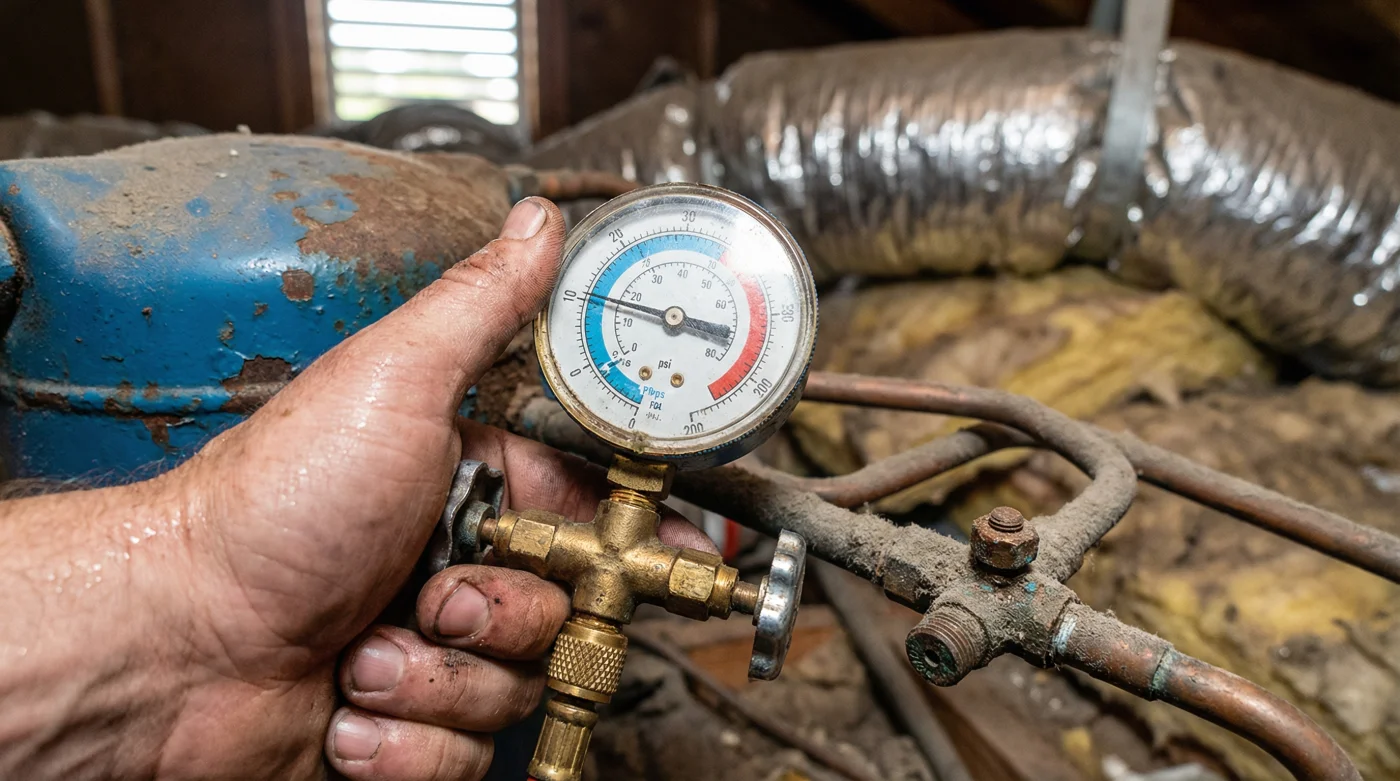
You know the sound. It is mid-July, the asphalt outside is radiating heat, and your air conditioning unit kicks on with a heavy, rattling groan. You hold your hand up to the living room vent, waiting for that sharp, icy blast. Instead, you get a sluggish breeze that feels like the house is exhaling a feverish breath. In the past, this meant a quick phone call, a friendly technician, and a routine top-off of refrigerant to get you through the season. Not anymore. This summer, that warm air carries a harsh financial reality.
The Lifeblood of the Cooling Cycle is Drying Up
The refrigerant in your air conditioner is the lifeblood of the machine. It absorbs the thick, stifling heat from your kitchen and carries it outside. But the specific lifeblood your current unit likely relies on—R-410A—is facing an aggressive, federally mandated phase-down. Treating a leaking coil with a fresh injection of R-410A used to be standard practice. Today, it is like trying to find cheap parts for a discontinued vintage car, only the stakes are your family’s comfort during a 100-degree heatwave.
The EPA is actively restricting the production and importation of R-410A. Why? Because the chemical has a high Global Warming Potential. As supplies shrink rapidly, the cost of the remaining inventory is skyrocketing. The era of the cheap, casual summer top-off is officially over, leaving homeowners staring down the barrel of full system replacements.
I recently spent an afternoon with Dave, a local HVAC veteran whose knuckles are permanently scarred from decades of wrestling with sheet metal and copper tubing. We were standing over a struggling 2012 condenser unit. “People expect me to just hook up the gauges and add a pound of juice,” he said, wiping sweat from his brow. “I have to tell them the cost of R-410A has tripled. And honestly? Pumping expensive, phased-out refrigerant into a leaking system is a temporary illusion. Soon, doing this will be heavily restricted, if not impossible.”
| Homeowner Profile | Current Reality | Strategic Benefit of Upgrading |
|---|---|---|
| The Band-Aid Fixer (Units 10+ years old) | Paying exorbitant prices for scarce R-410A top-offs every summer. | Eliminates recurring leak costs; dramatically lowers monthly electrical bills. |
| The New Buyer (Recently bought an older home) | Inherited a failing system on the brink of obsolescence. | Secures a 10-year parts warranty and peace of mind before the next heatwave. |
| The Proactive Planner (Units 7-9 years old) | Facing minor repairs but the system still cools adequately. | Allows time to source multiple quotes and avoid emergency panic-buying. |
The Mechanics of the Phase-Down
You cannot simply drain out the old R-410A and pour in the new, federally compliant refrigerants like R-454B or R-32. They are entirely incompatible. The oils do not mix, the operating pressures are vastly different, and the new chemicals are slightly flammable, requiring entirely redesigned sensors and safety valves inside the equipment.
| Technical Specification | Legacy R-410A | New Standard (R-454B / R-32) |
|---|---|---|
| Global Warming Potential (GWP) | Over 2,088 (Targeted for elimination) | Under 700 (EPA Compliant) |
| System Compatibility | Requires older, thicker copper coils | Requires new safety sensors and specific compressors |
| Supply Chain Status | Production cut by 40% in 2024 | Becoming the industry standard by 2025 |
Navigating the New Reality of Home Cooling
When your system starts blowing warm, your first instinct is to panic. Take a breath. Walk outside to your condenser unit and find the metal manufacturer’s plate near the refrigerant lines. Look for the Factory Charge label. If it says R-22 or R-410A, you are standing next to a fading technology.
- R-410A refrigerant bans force homeowners into expensive full HVAC system replacements.
- New EPA gas stove regulations ban these standard residential burner models.
- Plastic drywall anchors fail immediately under continuous dynamic television mount weight.
- Tankless water heaters require this vinegar flush routine every six months.
- MERV 13 HVAC filters actively burn out older furnace blower motors.
Ask the technician to physically show you the leak. Usually, it happens in the indoor evaporator coil, where constant condensation causes the metal to rust and pit. If the repair quote involves replacing major components on an R-410A system, stop. Stop spending money on a dying breed.
| What to Look For (Quality Signs) | What to Avoid (Red Flags) |
|---|---|
| Tech uses an electronic sniffer or soap bubbles to locate the exact leak. | Tech instantly suggests adding a pound of freon without checking for holes. |
| Detailed quotes explaining the cost of new equipment vs. patching the old. | Pressure tactics demanding you replace the unit today to get a magical discount. |
| Checking the indoor coil, outdoor unit, and ductwork airflow. | Only looking at the outdoor unit and ignoring the rest of the house. |
Beyond the Thermostat
Replacing an entire HVAC system is a heavy pill to swallow. It is a massive expense that rarely comes at a convenient time in your financial life. Yet, there is a profound peace of mind that comes from knowing the heartbeat of your home is stable. You are not just surrendering to a new federal regulation; you are stepping off the anxiety-inducing treadmill of constant summer breakdowns.
When you upgrade to a modern, compliant system, you are investing in a machine that hums quietly in the background, rather than rattling your windows. The air feels crisper, the humidity drops, and your home returns to being a true refuge, completely indifferent to the scorching pavement outside.
“The best time to replace an aging air conditioner is on a mild Tuesday in April, not during a triple-digit emergency in August when everyone else is desperate.”
Frequently Asked Questions
Is it illegal for me to keep running my current R-410A air conditioner?
No. You can run your current system for as long as it survives. The regulation only applies to manufacturing new units and the production of the refrigerant itself.Can a technician legally refuse to top off my leaking system?
Yes. Due to the high cost and environmental fines associated with knowingly venting refrigerants, many reputable companies now refuse to recharge systems with known, unfixed leaks.Will a new system require completely new wiring and ductwork?
Typically, your existing ductwork is fine, though it should be inspected for leaks. The electrical wiring usually remains the same, but the thermostat may need an upgrade to communicate with the new sensors.Why can’t I just buy a cheap R-410A system online right now to beat the ban?
Manufacturers are ceasing production of R-410A units. Buying leftover stock means you will be trapped buying insanely expensive, scarce refrigerant if it ever breaks down in the future.Are the new refrigerants actually better, or just a regulatory hassle?
They are significantly better. The new class of refrigerants operates more efficiently, meaning your compressor doesn’t have to work as hard, which translates to noticeably lower electricity bills.