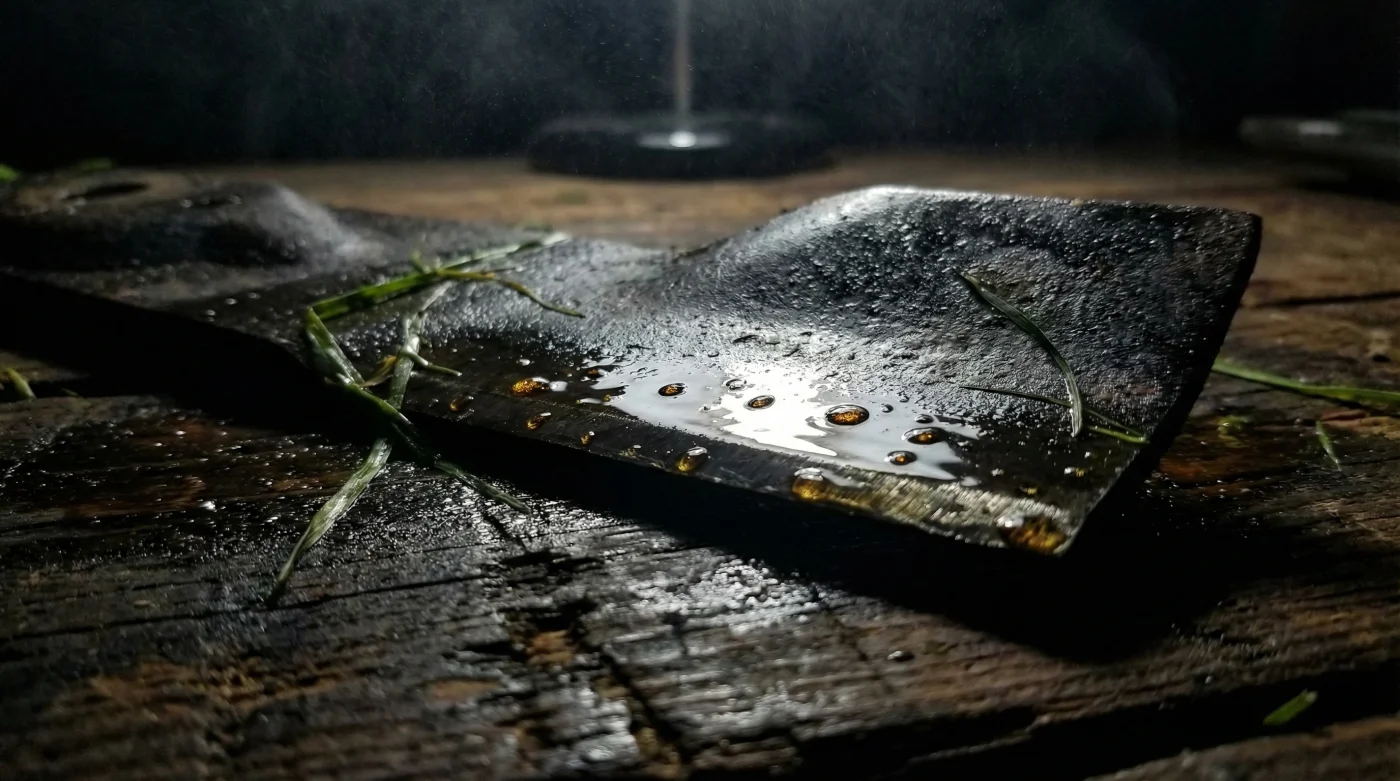
The Saturday morning ritual always starts the same way. The distinct, peppery scent of crushed fescue hangs in the humid air, mixing with the faint mechanical tang of gasoline. You pull the heavy machine from the shadowy corner of the garage, fully expecting it to glide through the yard. But the moment the engine roars to life, you feel that familiar, bone-rattling vibration traveling up the handle.
Underneath the deck, a silent deterioration has been taking place. Your blade is no longer a precision instrument; it has become a dull, rusted club that is tearing rather than slicing through your lawn. You spend your weekend wrestling with jagged grass tips that quickly turn brown, leaving your yard looking sick and exhausted.
We are taught from our first days working in a garage that moisture is the enemy of steel. The standard rule of thumb is to wipe your tools down and store them bone dry. If a drop of water touches raw metal, we rush to wipe it away, fearing the immediate onset of orange rust.
But when dealing with organic material that is eighty-five percent water, leaving steel completely naked is a guaranteed death sentence for the edge. Wet grass clippings act like a magnetic paste, cementing themselves to dry metal and trapping corrosive plant acids directly against the blade.
Rethinking the Friction Zone
Imagine your mower deck not as a static shell, but as a high-speed blender processing thousands of watery, acidic plant stalks every minute. The surface of a sharpened steel blade isn’t perfectly smooth; at a microscopic level, it looks like a jagged mountain range. When you store the blade completely dry, those microscopic peaks and valleys catch the wet plant matter.
This is where our perspective needs to shift. We assume that applying oil will just attract more dirt, but friction requires a breathable barrier. Instead of trying to eliminate moisture by keeping the metal barren, you introduce a sacrificial layer. A whisper-thin coating of cheap vegetable oil cooking spray fills those microscopic valleys, turning a coarse metal sponge into a non-stick skillet.
Elias Thorne, a 62-year-old head groundskeeper at a municipal golf course in Ohio, figured this out three decades ago. While rookies were out buying expensive synthetic rust inhibitors and thick grease, Elias kept a simple can of generic kitchen cooking spray in his maintenance cart. He discovered that the natural lipids in vegetable oil aggressively repel the heavy morning dew and sticky grass clumps, tripling the lifespan of his commercial blades without introducing harsh chemicals into the soil he was paid to protect.
Tailoring the Oil Defense
Not every yard demands the exact same approach. How you prepare your equipment depends heavily on the microclimate of your property and the time of day you choose to work. It requires adapting to your specific microclimate to get the best results from this simple pantry trick.
For the Early Riser: If you find yourself cutting through heavy morning dew or thick spring growth, your blade faces maximum water exposure. A light misting of canola spray immediately before you start the engine creates a hydrophobic shield.
The water literally beads up and rolls off the spinning edge, preventing that sudden engine bog when the deck gets overwhelmed by wet clumps. It keeps the motor running lean and fast, saving you from constantly stopping to clear out the discharge chute.
For the Sandy Soil Scraper: Those living in arid regions or newly constructed neighborhoods often deal with high levels of airborne grit. You might worry that oil will turn the undercarriage into a sticky sandbox.
The trick here is application timing. Spray the blade lightly after you finish mowing and have brushed the deck clean. The oil penetrates the steel pores overnight, curing into a dry film by your next mowing session.
For the Long-Term Winterizer: When the first frost hits and the machine goes into hibernation, rust works overtime in cold, damp sheds. A heavier coat of cooking spray on the sharpened edge seals out atmospheric moisture entirely, meaning you pull out a pristine, ready-to-cut blade come April.
The Three-Minute Preservation Ritual
Applying this technique requires a moment of deliberate caution. Never treat equipment maintenance as an afterthought. You are dealing with a machine designed to cut, so disconnect the spark plug wire before your hands ever cross the threshold of the mower deck.
Before you begin, gather your Tactical Toolkit: heavy leather work gloves, a stiff wire brush, a standard can of kitchen cooking spray, and your spark plug wrench. Prepare your workspace on a flat, even surface like a driveway or a cleared garage floor.
- Tip the mower backward on its rear wheels to expose the undercarriage safely, never on its side.
- Use the wire brush to gently scrape away any dried, caked-on grass from the previous session.
- Hold the cooking spray about six inches from the blade and apply a swift, even mist across the sharpened edge.
- Let the oil sit for sixty seconds to settle into the metal before lowering the machine back down.
More Than Just Maintenance
When you start paying attention to the friction points of your tools, the chore of yard work shifts from a battle of attrition into an act of stewardship. You stop fighting the grass and start working with the environment. A sharp, rust-free blade doesn’t just save you money on replacement parts; it ensures your grass is sliced cleanly, preventing disease and promoting a lush, resilient lawn. It allows you to solve a frustrating mechanical problem without a trip to the repair shop.
There is a quiet satisfaction in taking a household staple meant for a frying pan and using it to protect your equipment. It reminds us that sometimes the most effective solutions aren’t found on the shelves of a hardware store, but in the simple, overlooked chemistry sitting right in our own pantries.
“Steel remembers how you treat it; an ounce of oil today saves a pound of grinding tomorrow.”
| Key Point | Detail | Added Value for the Reader |
|---|---|---|
| Dry Storage | Leaving metal barren and exposed | Accelerates rust and traps wet grass |
| Kitchen Spray | A thin layer of natural lipids | Repels moisture, stops clumping organically |
| Heavy Solvents | Thick petroleum lubricants | Attracts grit and leaches into your soil |
Frequently Asked Questions
Will cooking spray make my mower deck attract dirt?
A very light coat cures slightly on the metal, repelling moisture without acting like a glue trap for dry dust.
Can I use olive oil instead of canola spray?
Canola or basic vegetable spray is best; olive oil has a different viscosity and can become sticky over time.
How often should I apply the spray?
A quick mist after every few mows, or immediately before cutting exceptionally wet grass, is perfect.
Is it safe to spray near the engine components?
Keep the spray strictly localized to the undercarriage and the blade to avoid gathering residue on hot engine parts.
Will the oil harm my lawn?
Unlike petroleum-based lubricants, vegetable oil is organic and completely harmless to your soil and grass.