It is 5:30 in the morning. The neighborhood is quiet, save for the rhythmic, mechanical hissing of irrigation systems waking up across the block. You step outside with your coffee, feeling the damp morning chill, and look down. A thick sheet of water is rolling off your driveway, cascading into the street drain.
Instead of nurturing a lush lawn, you are watering the hot concrete, creating a shallow river of wasted utility money and lost municipal resources right at your feet.
There is an unwritten rule in homeownership that assumes factory configurations are intentional. When you buy a new piece of hardware, you naturally trust that the manufacturer calibrated it for optimal performance. But when you pull a new pop-up emitter out of its box, that wide-open spray pattern isn’t a suggestion. It is a blank canvas.
Allowing your irrigation to run wide is like driving a car with a brick on the gas pedal. The system isn’t broken; it is simply untamed. You hold the power to bring it to heel with a tool you already have sitting in your kitchen drawer.
The Myth of the Factory Default
Most of us treat yard maintenance with a sort of passive hope. We set the timer on the control box in the garage, walk away, and trust the subterranean pipes to do the rest. The belief that factory sprinkler settings are optimal is a stubborn illusion. Manufacturers ship their gear completely open to prove they work at maximum capacity, not to suit the delicate borders of your front yard.
Think of that little nozzle as a wild, untethered hose. Without direct intervention, it will aggressively throw water across sidewalks, against stucco siding, and over wooden fences. The perspective shift happens when you realize that every single head in your yard is meant to be sculpted, shaped, and restricted.
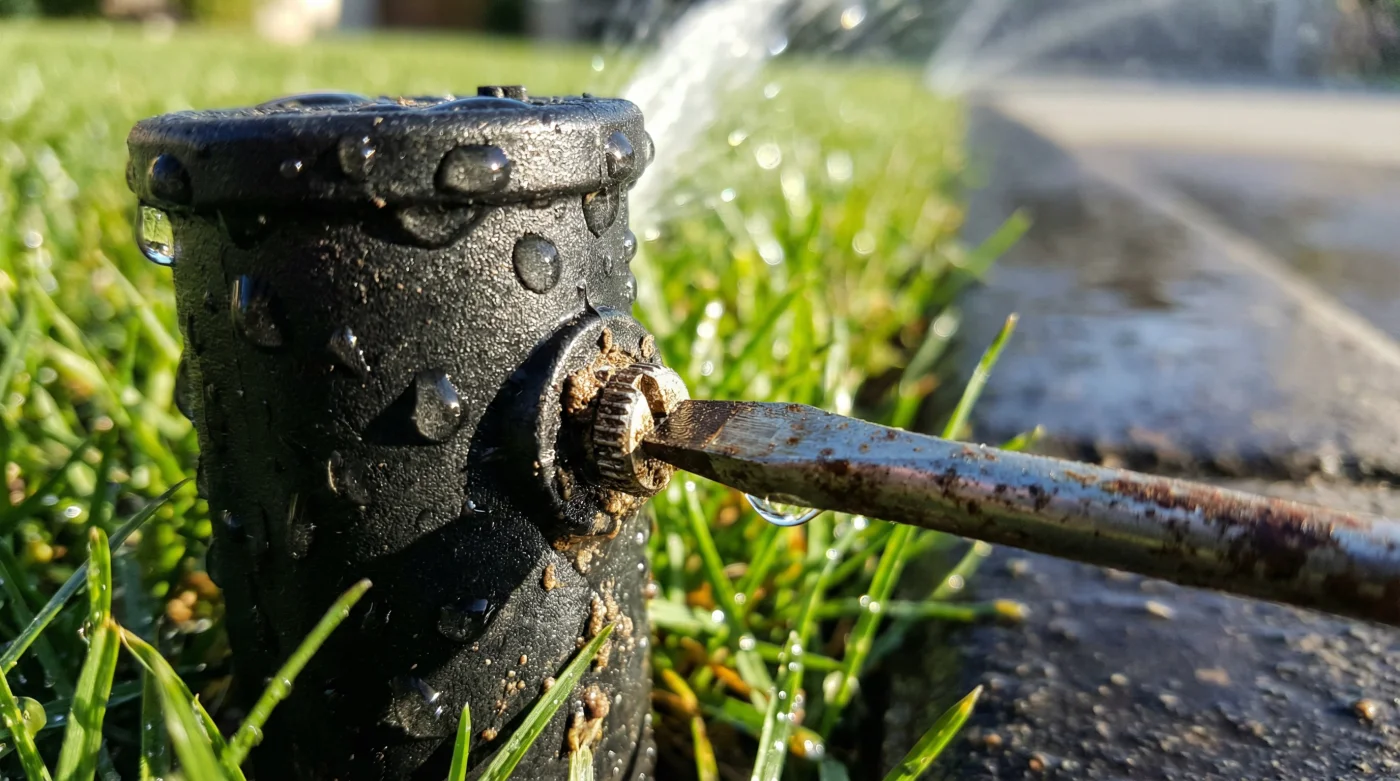
Right at the top of the stem, often hidden beneath a thin film of mud or wet grass clippings, sits a tiny metal slot. This radius screw is the master control. A simple quarter-turn breaks the water tension, dropping the spray short of the concrete and directing it exactly where the roots desperately need it.
The Auditor’s Secret
Elias Vance, a 42-year-old municipal water auditor working the sun-baked suburbs of Denver, spends his summers issuing warnings to homeowners. People think a flooded sidewalk is just an unavoidable side effect of keeping the grass green, he noted while walking a parched neighborhood last July. They replace expensive timers, they dig up pipes, they curse the local water district.
Elias carries a single, pocket-sized flathead screwdriver on a worn lanyard around his neck. He demonstrated how 80 percent of the neighborhood’s runoff could be solved without laying a single new pipe. By pinching the flow at the very top of the nozzle, he disrupts the water stream, turning a chaotic, airborne mist into a heavy, targeted curtain. It takes him less than five seconds per sprinkler to save a household thousands of gallons a season.
Mapping Your Terrain
Not every patch of grass requires the same heavy hand. To truly conquer your plumbing system, you have to look at the unique geometry of your property. Water behaves differently depending on the slope, the wind, and the boundaries it hits.
For the hardscape borders, walk the edge where your grass meets the driveway. These heads are the absolute worst offenders. You want to dial the edge down until the water droplet pattern falls roughly two inches short of the pavement. The ambient breeze will easily carry the rest of the moisture across that gap.
For the steep slopes, gravity is already doing the watering for you. A nozzle blasting at a full radius here will instantly cause topsoil erosion. Tighten the radius screw to force the water down at a steeper angle, dropping it closer to the base of the emitter where it can soak rather than run off down the hill.
For the corner pockets, pay attention to the tight, ninety-degree traps against the foundation of your house. Never spray the stucco under any circumstances. Adjust the radius screw down aggressively. You want the water to fan out like a low, heavy blanket, barely reaching the perimeter flowers without ever touching the exterior paint.
The Five-Minute System Conquest
Taking control of your water flow is a quiet, meditative process. You don’t need a shovel, and you don’t need to call a landscaping professional. You just need a dry afternoon and a bit of patience.
Wait until the yard is dry, and turn on a single watering zone manually from your control box. Walk out to the very first head that carelessly sprays onto the pavement.
- Bring a standard 1/8-inch flathead screwdriver and a hand towel.
- Stand behind the sprinkler so you don’t get soaked. Watch where the heaviest droplets fall.
- Insert the flathead into the center of the nozzle. You will feel a slight resistance from the water pressure.
- Turn the screw clockwise. Go slowly. You will immediately see the spray pattern shrink and thicken.
- Keep turning until the edge of the water falls exactly on the grass line. If you go too far, the water will choke and sputter. Just back it off slightly.
You are looking for a thick, heavy drop rather than a fine, airborne mist. Mist simply evaporates before it ever hits the soil; heavy drops actually penetrate the root system.
The Quiet Satisfaction of Stewardship
There is a profound sense of order that comes from fixing a system that has been quietly failing you. We spend so much time putting out metaphorical fires in our daily lives that we often completely ignore the literal water spilling out onto our streets.
When you finally tame the mechanical spray, the entire atmosphere of your yard changes. The concrete stays dry and warm in the morning sun. The water bill softens noticeably. You stop bracing for that sudden, cold blast on your ankles when you walk out to get the morning mail.
It is a small, hidden adjustment, but it fundamentally reclaims your property. You aren’t just saving a natural resource; you are taking ownership of the hidden systems that run your home. You shift from a passive resident to an active steward, finding harmony in the simple turn of a single, mud-covered screw.
Water does not know where the grass ends, so you have to draw the line for it. – Elias Vance
| Key Point | Detail | Added Value for the Reader |
|---|---|---|
| Factory Settings | Sprinklers ship fully open for maximum pressure testing. | Saves you from blaming the hardware for a flooded driveway. |
| The Radius Screw | A small flathead slot located in the center of the nozzle. | Provides immediate, manual control over water throw distance. |
| Droplet Weight | Adjusting the screw turns fine mist into heavy water drops. | Reduces wind evaporation and pushes moisture deep into roots. |
System Adjustment FAQ
Do I need to turn the water off to adjust the screw? No, you actually need the water running so you can clearly see the spray pattern change in real time.
What if the screw won’t turn? Minerals from hard water can lock the threads. Tap the top gently with the handle of your screwdriver, or apply a single drop of white vinegar to dissolve the calcium.
Can I adjust the angle of the spray as well? Yes, while the center screw adjusts the distance, turning the textured collar on the nozzle itself will adjust the pie-shaped arc of the spray.
Will tightening the screw increase the water pressure? It restricts the opening, which slightly increases pressure at the nozzle, turning the output into larger, heavier drops that resist the wind.
How often should I check these settings? Walk your yard once at the beginning of spring and once in mid-summer. Mowers and foot traffic can occasionally bump the heads out of alignment.