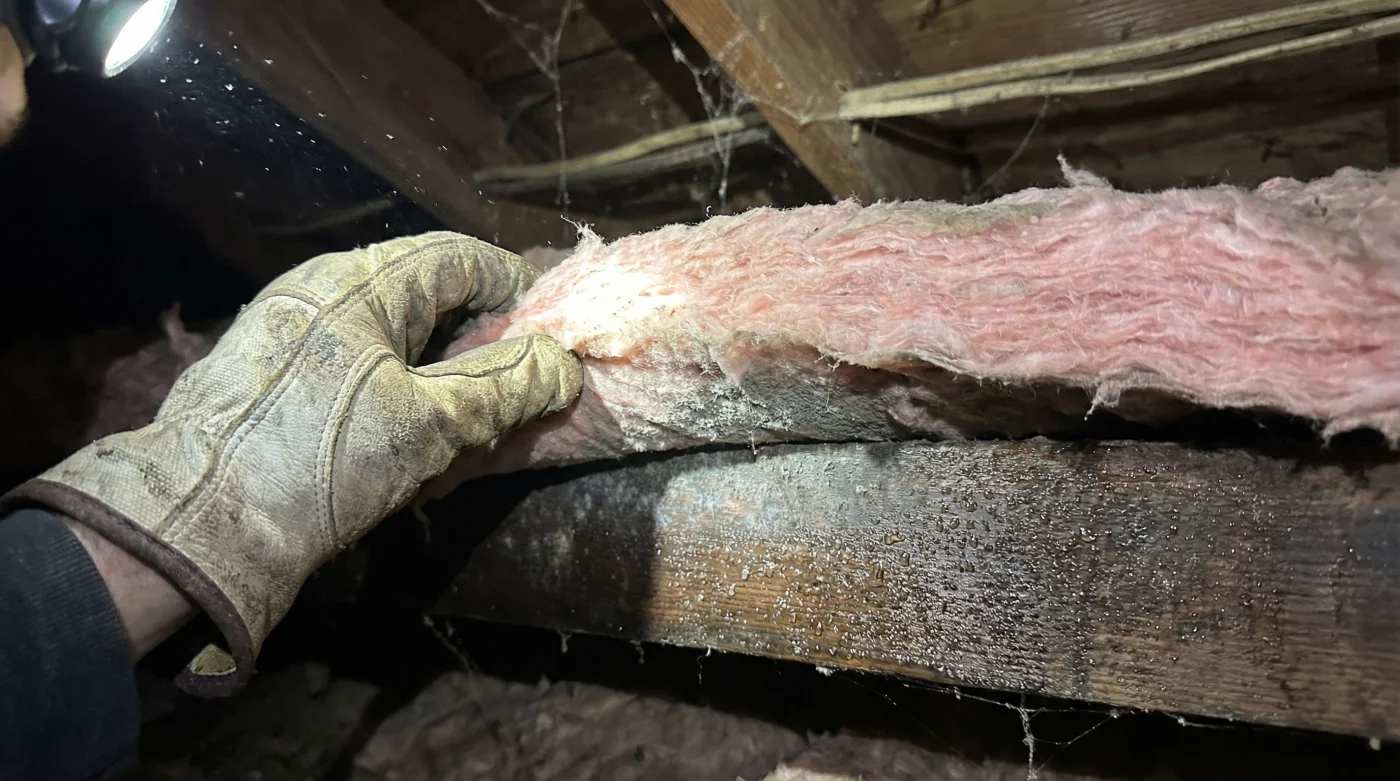
It is mid-January. You push open the attic hatch, expecting the dry, dusty chill of stored cardboard boxes and forgotten winter coats. Instead, the air hits you with a heavy, damp musk—like wet newspapers left in a closed, sun-baked car. You shine a flashlight across the sea of fluffy pink fiberglass, the very material you proudly rolled out last fall to keep the house warm and the energy bills low. But look closer. Beneath that soft blanket, the wooden joists are sweating. Droplets of condensation cling to the roof nails, catching the beam of your light. Your house is warm, yes. But it is also quietly drowning.
The Suffocation Myth
There is a persistent idea that more insulation automatically equals a better, more efficient home. It feels logical. If you are cold, you put on a thicker coat. But throwing down endless layers of fiberglass without managing the breathability of your ceiling is like wearing a thick wool sweater under a rubber raincoat while going for a run. The sweat has nowhere to go. It just pools against your skin, eventually making you colder and miserable.
Fiberglass is exceptional at trapping heat, but it acts like a giant sponge for the rising humidity generated by your daily life. Every time you boil water for pasta, take a hot shower, or run the laundry, warm, moist air rises. When that moisture hits the cold attic air, it condenses. Without a physical shield to stop it, your premium insulation absorbs that water, losing its thermal resistance and resting damply against your wooden framing.
| Homeowner Profile | The Specific Benefit of Proper Barriers |
|---|---|
| Cold-Climate Residents | Stops severe winter condensation from freezing and thawing on roof decking. |
| Older Home Renovators | Protects vintage, irreplaceable wooden joists from latent moisture rot. |
| DIY Energy Savers | Maintains the true R-value of fiberglass, as wet insulation loses its ability to hold heat. |
Years ago, I shadowed a seasoned Michigan contractor named Elias. He had spent three decades framing houses through brutal Midwestern winters. We were standing in a poorly ventilated attic exactly like the one you might be picturing. He reached down, squeezed a handful of ruined fiberglass, and wrung out actual water. He looked at me and said, ‘Insulation keeps the heat, but the barrier keeps the house standing.’ He explained that most homeowners rely entirely on the thin paper backing of their insulation—the kraft facing—assuming it acts as a foolproof shield. It does not.
| Material Spec | Permeability Rating | Mechanical Logic |
|---|---|---|
| Standard Kraft Paper Facing | 1.0 Perms | Adequate for mild climates, but seams are rarely taped perfectly, allowing vapor leaks. |
| 4-Mil Polyethylene | 0.08 Perms | Blocks moisture well but tears easily when dragged across rough wooden joists. |
| 6-Mil Polyethylene (The Gold Standard) | 0.06 Perms | The exact thickness contractors trust. Impervious to vapor, durable enough to walk on, prevents mold. |
Laying Down the Shield
- R-410A refrigerant bans force homeowners into expensive full HVAC system replacements.
- New EPA gas stove regulations ban these standard residential burner models.
- Plastic drywall anchors fail immediately under continuous dynamic television mount weight.
- Tankless water heaters require this vinegar flush routine every six months.
- MERV 13 HVAC filters actively burn out older furnace blower motors.
First, you must gently roll back the existing insulation. Do not compress it or crush it, as fiberglass relies on trapped air pockets to do its job. Lay the 6-mil plastic sheeting directly against the drywall or plaster floor of the attic. You want it resting flat, creating an unbroken skin over the living space below.
When you reach a joist, you do not simply cut the plastic. You drape it. Allow the material to hug the wood, minimizing gaps. The most crucial step happens at the seams. Overlap the edges of the plastic by at least six inches and seal them aggressively with acoustic sealant or dedicated vapor barrier tape. Press the tape down with the heel of your hand, ensuring a tight, permanent bond.
Finally, carefully place the fiberglass back over the plastic shield. It should sit lightly, fully lofted, unaware of the moisture trying to push up from the bathroom below. You are essentially giving your insulation a waterproof floor to rest on.
| Vapor Barrier Element | What to Look For | What to Avoid |
|---|---|---|
| Plastic Material | 100% Virgin Polyethylene (clear or opaque). | Recycled poly, which often contains microscopic pinholes that let vapor through. |
| Seam Tape | Acoustic sealant or specialized poly-sheathing tape. | Standard duct tape, which dries out and flakes off in extreme attic heat. |
| Installation Style | Continuous overlapping runs that cover entire room sections. | Patchwork squares or leaving gaps around ceiling light fixtures. |
The Rhythm of a Healthy Home
When you take the time to install the right barrier, you are doing more than just following a building code. You are changing the way your house breathes. You no longer have to worry when the temperature drops to single digits and the heater is running around the clock. Your home becomes a closed, intentional system. The warmth stays wrapped around your family, the moisture vents safely outside, and the attic remains a quiet, dry sanctuary.
There is a profound peace of mind that comes with knowing the bones of your house are protected. The next time you push open that attic hatch in the dead of winter, you will not smell wet newspaper. You will just feel the cold, crisp air, hovering harmlessly above a thick, dry blanket of pink.
The true craft of a warm home isn’t found in the thickness of the walls, but in the invisible boundaries that tell the moisture where to stop.
Frequently Asked Questions
Do I need a vapor barrier if I live in a hot, southern climate? In hot, humid climates, the vapor barrier rules often reverse; you generally do not place an interior vapor barrier on the ceiling, as moisture pushes inward from the humid outdoors toward your air-conditioned rooms. Always check your local climate zone guidelines.
Can I just add more insulation on top of wet fiberglass? No, placing dry insulation over wet insulation traps the water against your ceiling, accelerating mold growth and wood rot. You must remove the wet material, fix the moisture issue, and let the space dry completely.
Is it okay to use two layers of vapor barrier? Never. Using two distinct vapor barriers traps condensation between the layers, creating a miniature greenhouse for mold. Stick to one continuous 6-mil layer on the warm side of the structure.
Will acoustic sealant off-gas into my living space? High-quality acoustic sealants are designed to remain flexible under drywall and plastic for decades and emit very low VOCs once cured, making them perfectly safe for residential use.
How do I handle ceiling fixtures like recessed lights? Ensure your lights are rated for insulation contact (IC-rated). You should build or buy specialized airtight covers that sit over the lights in the attic, sealing the 6-mil plastic directly to the edges of the cover.