You know the sound. It is a quiet, rhythmic sloshing that lulls you into a sense of domestic productivity. You throw a load of towels into the washer, shut the utility room door, and walk away to make a pot of coffee. But there is another sound you almost never hear until it is entirely too late: a soft, wet tear, followed immediately by the relentless roar of municipal water pressure flooding your floorboards. Walking into a puddle in your living room in your socks is bad enough. Walking into two inches of standing water creeping steadily toward your drywall is a uniquely American homeowner’s nightmare. It is a catastrophic everyday danger most of us completely ignore.
The Ticking Water Balloon Behind Your Wall
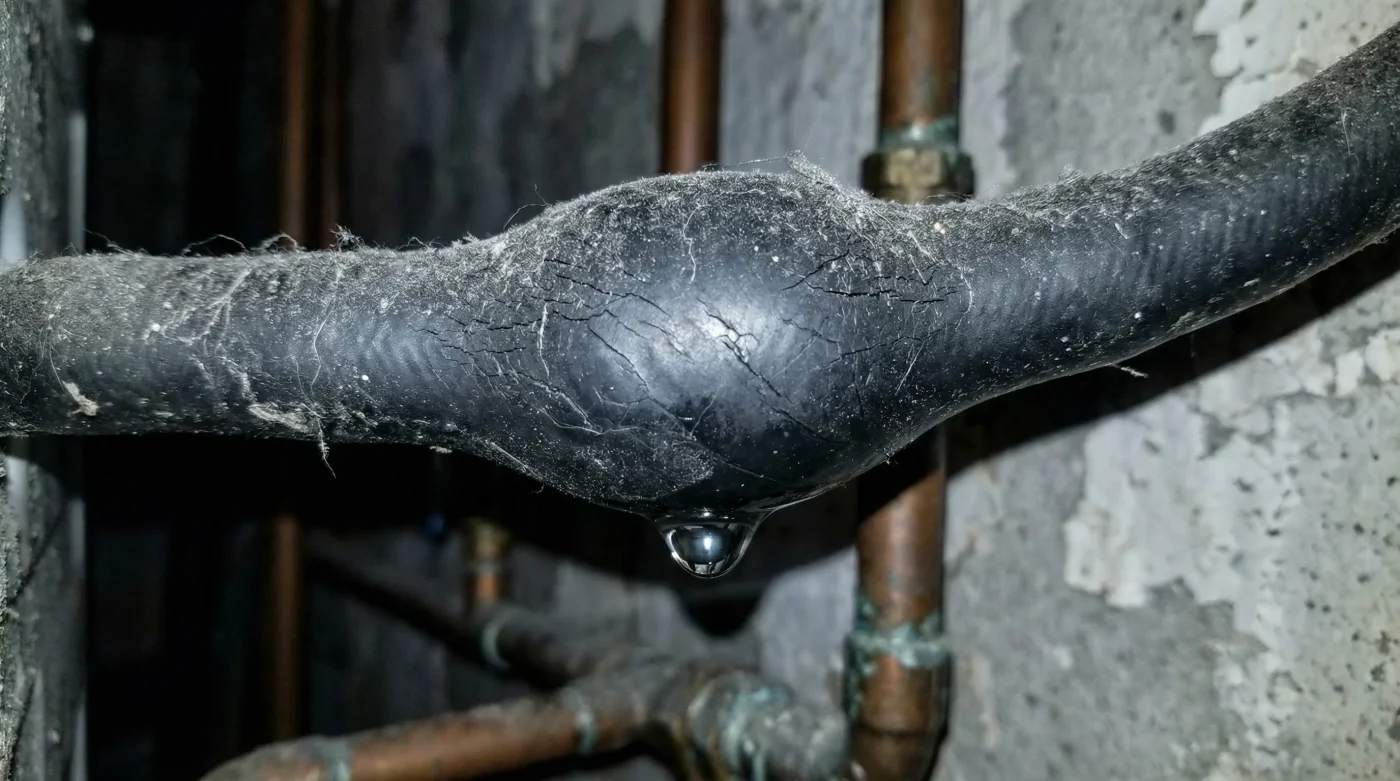
Most of us never bother to look behind the washing machine. If we did, we would see two black rubber hoses bending awkwardly under the weight of their own existence. Think of these traditional rubber hoses as slow-motion water balloons. Your home water pressure typically hovers around 60 pounds per square inch, pushing violently against that cheap rubber twenty-four hours a day, 365 days a year. Every single time the machine’s internal water valve snaps shut during a rinse cycle, a shockwave of kinetic energy slams backward into that fragile rubber line. Over the years, the rubber fatigues, blistering and bulging in the dark where no one can see it.
I learned this brutal lesson from a seasoned emergency remediation specialist named Dave. We were standing in a ruined basement in Ohio, surrounded by warped oak floorboards and soaked family photo albums. Dave reached behind the appliance and held up a swollen, blistered piece of black rubber. “People always tell me they are terrified of tornadoes or electrical fires,” he said, rubbing the deeply cracked rubber between his calloused thumbs. “But nine times out of ten, it is a twenty-dollar piece of factory rubber that bankrolls my business. They burst silently, and they never stop running.” It was a sobering perspective. A house is essentially a living, breathing mechanical system, and its plumbing arteries are only as strong as their weakest point.
| Home Setup | Specific Benefit of Upgrading |
|---|---|
| Second-Floor Laundry | Prevents catastrophic multi-level water damage to drywall, joists, and first-floor ceilings. |
| Frequent Travelers | Eliminates the quiet anxiety of coming home to a flooded, mold-infested residence. |
| Older Homes with Basements | Protects stored family heirlooms and vulnerable foundation layouts from standing water. |
The Anatomy of a Better Artery
The solution to this impending disaster is surprisingly humble and highly accessible: braided stainless steel hoses. Unlike simple extruded rubber, these heavy-duty hoses are encased in a tight weave of interwoven metal wiring that acts like a straitjacket for the inner water tube. They simply do not expand when the water hammers against them. Instead, they hold their rigid shape, forcing the pressure to dissipate safely rather than stretching the internal rubber material to a tearing point. When you hold one in your hand, you can immediately feel the density and the structural integrity.
| Material Metric | Standard Rubber Hose | Braided Stainless Steel |
|---|---|---|
| Burst Pressure Resistance | Prone to severe swelling at 60-80 PSI over time | Reinforced metal weave withstands extreme pressure spikes |
| Visual Warning Signs | Micro-cracks, dark blisters, and physical bulging | Maintains a uniform structural shape until safe replacement |
| Average Safe Lifespan | 3 to 5 years (though frequently ignored) | 10+ years of highly stable, worry-free performance |
Swapping the Hoses: A Five-Minute Ritual
You absolutely do not need a specialized plumbing license or expensive tools for this upgrade. You simply need a reliable pair of slip-joint pliers, an empty bucket, and five minutes of uninterrupted focus. Start by reaching behind the washing machine and turning both the hot and cold wall valves clockwise until they firmly stop. Give them a deliberate twist, but be mindful not to force them past their natural stopping point and damage the sensitive valve stems.
Next, place your bucket directly under the wall connections to catch the inevitable residual water. Use your pliers to gently loosen the metal fittings on the old rubber hoses. You will likely feel a slight, satisfying crunch of mineral and calcium buildup giving way, followed by a minor trickle of water. Unscrew the fittings the rest of the way using your bare hands, and carefully pull the old hoses away from the machine.
- Major mortgage lenders reject home loans featuring this specific spray foam.
- Treated pine decking prices spike twenty percent amid unexpected chemical shortages.
- Rubber washing machine hoses burst silently without this braided steel upgrade.
- Garbage disposal splash guards require this boiling water reset every month.
- Kitchen cabinet tension rods double storage space for bulky baking sheets.
| What to Look For (Quality Indicators) | What to Avoid (Red Flags) |
|---|---|
| True 304 stainless steel exterior braiding | Cheap aluminum weaves marketed as a “metal look” |
| Solid, heavy brass nuts and connection fittings | Flimsy plastic collars or thinly plated zinc metals |
| Clearly stamped UPC or CSA safety certifications | Unbranded products lacking a verified pressure rating |
Buying Back Your Peace of Mind
Home ownership is frequently an exhausting exercise in deferred maintenance, requiring you to constantly choose which minor household flaw to ignore today. But the silent, lingering threat of an aging rubber hose is not just a cosmetic flaw; it is an active, pressurized countdown. Swapping those brittle lines out for braided steel is an empowering act of taking back control. It is a small, profoundly tactile victory over the unpredictable chaos of owning a home.
The next time you load the washer with heavy towels and walk away, you will not have to wonder if today is the day the rubber finally gives out. You will simply hear the water rush confidently into the basin, resting easy with the knowledge that it is safely contained within an unyielding cage of steel. That tiny shift in your daily rhythm—moving from blind trust to engineered certainty—is worth far more than the twenty dollars you spent at the local hardware store. It is pure, unadulterated peace of mind.
“A braided steel washing machine hose is the absolute cheapest flood insurance policy you will ever buy for your home.” — Dave, Emergency Remediation Specialist
Frequently Asked Questions
Do I still need to replace braided steel hoses eventually?
Yes. While they are vastly superior in strength, the internal rubber core can still degrade over time. Replace them every decade to remain completely safe.Should I turn off the water valves after every single wash?
Ideally, yes. Doing so completely removes the immense pressure from the hoses, though modern braided lines make this habit slightly less critical.Do automatic shutoff valves work well with these steel hoses?
Absolutely. Pairing a heavy-duty braided steel hose with an automatic leak-sensing shutoff valve offers the ultimate layered defense against unexpected leaks.Why do my pipes bang violently when the washer stops filling?
That sound is called water hammer. The sudden stop of flowing water causes a physical shockwave. Braided hoses handle it far better than rubber, but installing small water hammer arrestors at the valve is the true mechanical fix.Are all braided steel hoses sold at the hardware store the same quality?
No. Always carefully verify the connection fittings are made of solid brass and the braiding is authentic stainless steel, rather than a cheap aluminum imitation that can easily corrode.