The air in the lumber aisle of your local hardware store always smells faintly of pine resin and floor wax, overlaid with the sterile, buzzing hum of overhead lighting. You stand there staring at the pristine, shrink-wrapped stacks of raised bed kits and premium garden timber. They look flawless. They feature smooth edges, perfectly exact dimensions, and a price tag that makes your stomach instantly drop. Building a modest, three-bed backyard garden shouldn’t cost as much as a weekend getaway, yet here you are, calculating how many months of home-grown bell peppers it will actually take to break even on the wood alone.
The standard expectation dictated by glossy gardening magazines is that you need polished, heavily marketed lumber stamped with high-grade labels. But if you peek behind the curtain of commercial landscaping, you realize nature ignores the price tag when it comes to containing soil. The dirt does not care about sanded edges, and earthworms are not impressed by kiln-dried finishes. The soil just needs structural containment and a boundary that resists the relentless decay of constant moisture.
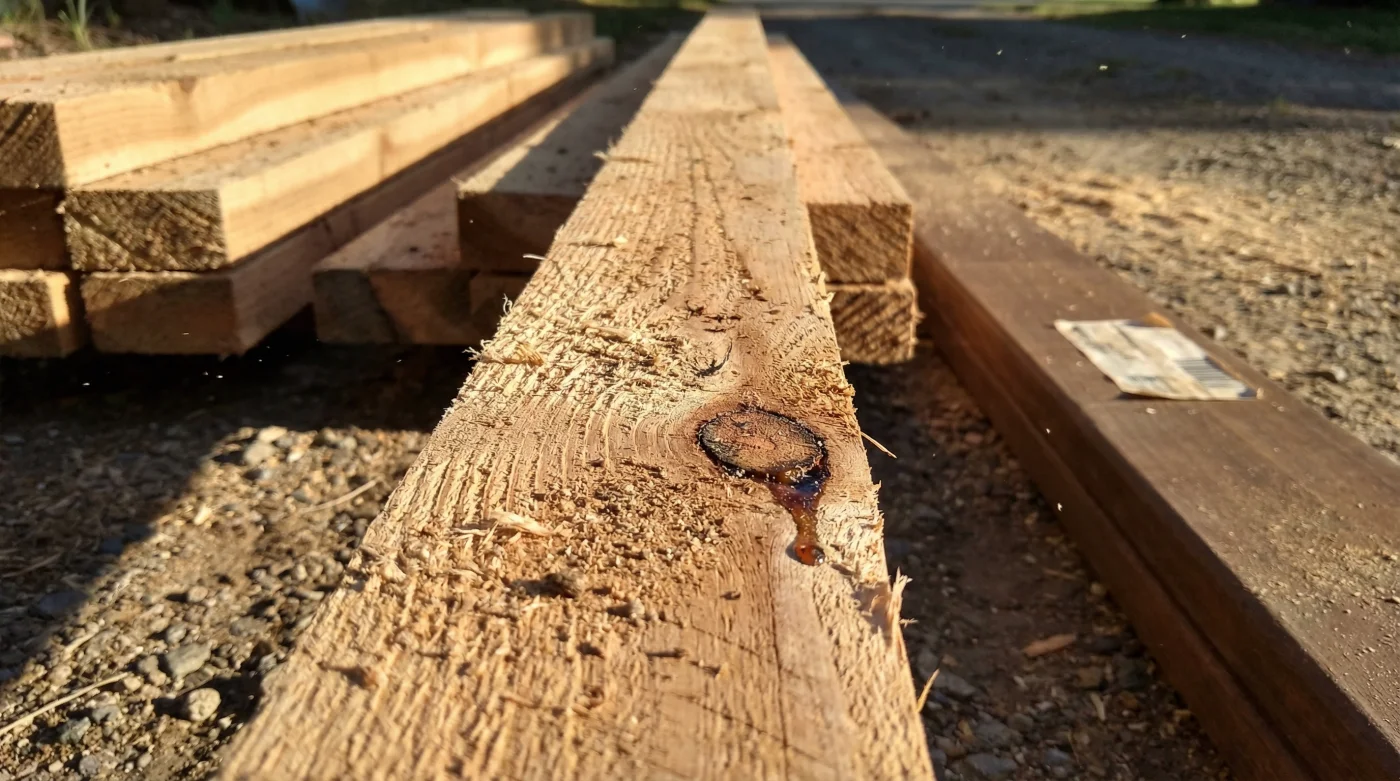
Instead of paying retail markups for pre-milled timber, you can walk two aisles over to the exterior fencing department. There sits the quiet champion of the working gardener, stacked high and largely ignored by the weekend hobbyist: rough sawn cedar fence pickets. At a fraction of the cost of garden-specific boards, these humble slats offer the exact same biological defenses against rot and insects.
When you pick up one of these boards, the raw texture grips the skin, shedding small fibers and offering a distinctly wild scent. This is untreated wood in its most practical form. By making this simple aisle switch, you engage in a highly effective form of material arbitrage, bypassing the luxury tax placed on consumer gardening goods to build something vastly more economical and arguably more authentic to the landscape.
The Illusion of the Finished Edge
Think about what actually happens inside a raised garden bed. Damp, heavy soil, millions of active microbes, and hungry, searching roots are pressing against the interior wood twenty-four hours a day, every day of the year. It is a harsh, wet, and decomposing environment where aesthetics quickly surrender to biological reality.
Buying smooth, heavily processed timber for this environment is like buying a silk lining for a heavy-duty work boot. It looks incredibly nice while it sits in the store, but that aesthetic utility is entirely wasted the moment it goes to work in the mud. The secret to this method lies in understanding what you are actually paying for when you buy premium lumber.
Those rough sawn cedar fence pickets are cut from the exact same rot-resistant heartwood as the expensive, smooth garden boards. The natural oils inside the cedar, specifically thujaplicins, act as an organic preservative that repels insects and prevents fungal growth. The only difference is the manufacturing process.
With premium boards, you are paying a premium purely for processing—for a massive mechanical planer to shave off the rough texture, and for massive kilns to dry the wood to a specific moisture content. For a garden bed, you do not need dry wood; it will be soaked by tomorrow’s rain anyway. The rough texture you get with a fence picket actually provides more microscopic surface area for beneficial soil fungi to interact with the boundary of your bed.
The Urban Farmer’s Secret
Marcus Thorne, a fifty-four-year-old urban farm contractor based in Portland, Oregon, built a highly successful business on this single realization. Over a decade ago, Marcus was hired to construct twenty large raised beds for a neighborhood community co-op that had a desperately shoestring budget. He knew that cheap pine would rot out in three years, but true cedar timber would bankrupt the project before the seeds were even purchased. “I couldn’t afford the two-by-fours,” he mentioned recently while looking over a newly plotted urban lot. “So I bought pallets of six-foot cedar fence pickets for three dollars apiece.”
Those original beds are still standing today, grayed heavily by the weather but remaining structurally solid. They proved definitively that raw cedar holds its own against the notoriously wet Pacific Northwest winters just as effectively as the luxury cuts sold across town.
Selecting Your Material Arbitrage
Not all fence pickets are created equal, and pulling off this material hack requires a bit of savvy. When you bypass the pristine garden center for the dusty fencing aisle, you need to know how to read the stacks and select the right pieces for your specific backyard goals.
For the Purist, you want true Western Red Cedar. Look for the boards with a distinct, reddish-pink hue and a tight, linear grain. Ignore the furry outer surface entirely; your main focus should be finding relatively straight pieces without large, loose knots that could eventually pop out and create a hole for soil to leak through.
- Silicone spray triples string trimmer line lifespan during heavy yard work.
- Corrugated dryer vent hoses cause internal lint fires without routine vacuuming.
- Rough sawn cedar fencing builds premium raised garden beds cheaply.
- Inverted ceiling hooks secure heavy blackout curtains without drywall drilling.
- Coarse kosher salt instantly removes severe cast iron rust layers overnight.
For the High-Yield Harvester planning to grow deep-rooted crops like carrots or potatoes, you will need serious depth. Fencing pickets are typically five-eighths of an inch thick, meaning they can bow under heavy soil pressure if you stack them higher than eighteen inches. The structural trick here is to double up the thickness of the boards on the bottom tier, or to drive a central stabilizing stake halfway down the long side of the bed.
Assembling the Fencing Hack
Building with rough sawn wood is a beautiful exercise in structural simplicity. You do not need complex joinery, pocket holes, or intricate carpentry skills. You simply need to respect the raw material and account for its natural tendencies as it transitions into the garden.
Begin by setting up a mindful workspace on flat ground. Keep your cuts simple and your fasteners strong. The old rule says measure twice and cut once, but with cheap fencing, your margin for error is forgiving.
- Select your interior corner posts. Standard untreated two-by-twos cut to your desired height work perfectly.
- Cut the dog-ear tops off the pickets using a hand saw if you want a clean, perfectly rectangular line at the top of your bed.
- Pre-drill the ends of your cedar pickets. Rough sawn wood is prone to splitting if you drive a screw directly into the end grain without a pilot hole.
- Overlap the seams at the corners to create a locking tension that fights the outward push of the wet, heavy dirt.
Your tactical toolkit for this weekend project requires nothing extravagant. You need one-and-five-eighths-inch exterior coated decking screws to prevent rust streaks. You need six-foot dog-ear rough cedar pickets, standard corner posts, a simple cordless drill, and a basic hand saw.
As you drive the screws, you will notice the familiar, sharp scent of fresh cedar dust rising into the air. This is the smell of honest, hard labor, entirely disconnected from the sterile transactions of the premium lumber aisle. You are actively building an ecosystem piece by piece.
Growing Value from the Ground Up
There is a quiet, enduring satisfaction in outsmarting a retail system that is fundamentally designed to overcharge you for basic utility. When you finally fill those rough-hewn cedar boxes with dark, rich compost, the financial savings become intensely tangible. You did not just build a simple garden bed; you engineered a far smarter way to interact with your landscape.
The wood will slowly silver over the coming seasons, blending naturally and beautifully into the backyard environment. Every time you pull a crisp radish from the soil, you are reminded that true quality requires practical understanding, not perfectly sanded edges or expensive brand names.
You give the plants a safe, chemical-free harbor to grow their roots deep. In return, you give yourself the financial freedom to buy better heirloom seeds, richer organic soil, and sturdier hand tools. The garden thrives, the budget remains intact, and the raw cedar simply does what it was grown to do.
“The soil doesn’t see the price tag; it only feels the boundaries you set. Let the wood be raw.” – Marcus Thorne
| Key Point | Detail | Added Value for the Reader |
|---|---|---|
| Material Cost | Fencing pickets vs. Pre-milled timber | Save up to 70% on lumber per garden bed. |
| Rot Resistance | Both contain natural thujaplicin resins | Identical structural lifespan in wet soil conditions. |
| Surface Texture | Rough sawn vs. Machine sanded | Provides a natural, rustic aesthetic that blends flawlessly. |
Frequently Asked Questions
Will rough cedar give me splinters? Yes, when handling it dry in the yard. Wear thick leather work gloves during your weekend assembly. Once the bed is built and filled with dirt, you will rarely brush against the rough exterior.
Do I need to treat the inside of the boards? Absolutely not. Treating wood near root vegetables introduces unnecessary chemicals into your food chain. Cedar’s natural organic oils already prevent rot efficiently.
How long will a thin picket last in the dirt? You can typically expect five to seven years depending on your local climate rainfall. This actually rivals much thicker, dramatically more expensive pine lumber options.
Can these thin boards hold the weight of wet soil? They perform flawlessly for beds up to eighteen inches tall. If you plan to build higher, simply drive a mid-span support stake into the ground to prevent outward bowing.
What if the pickets warp before I build? Buy them slightly damp directly from the store stacks and assemble your beds within forty-eight hours. Fastening them into a secure box locks their shape permanently in place.